

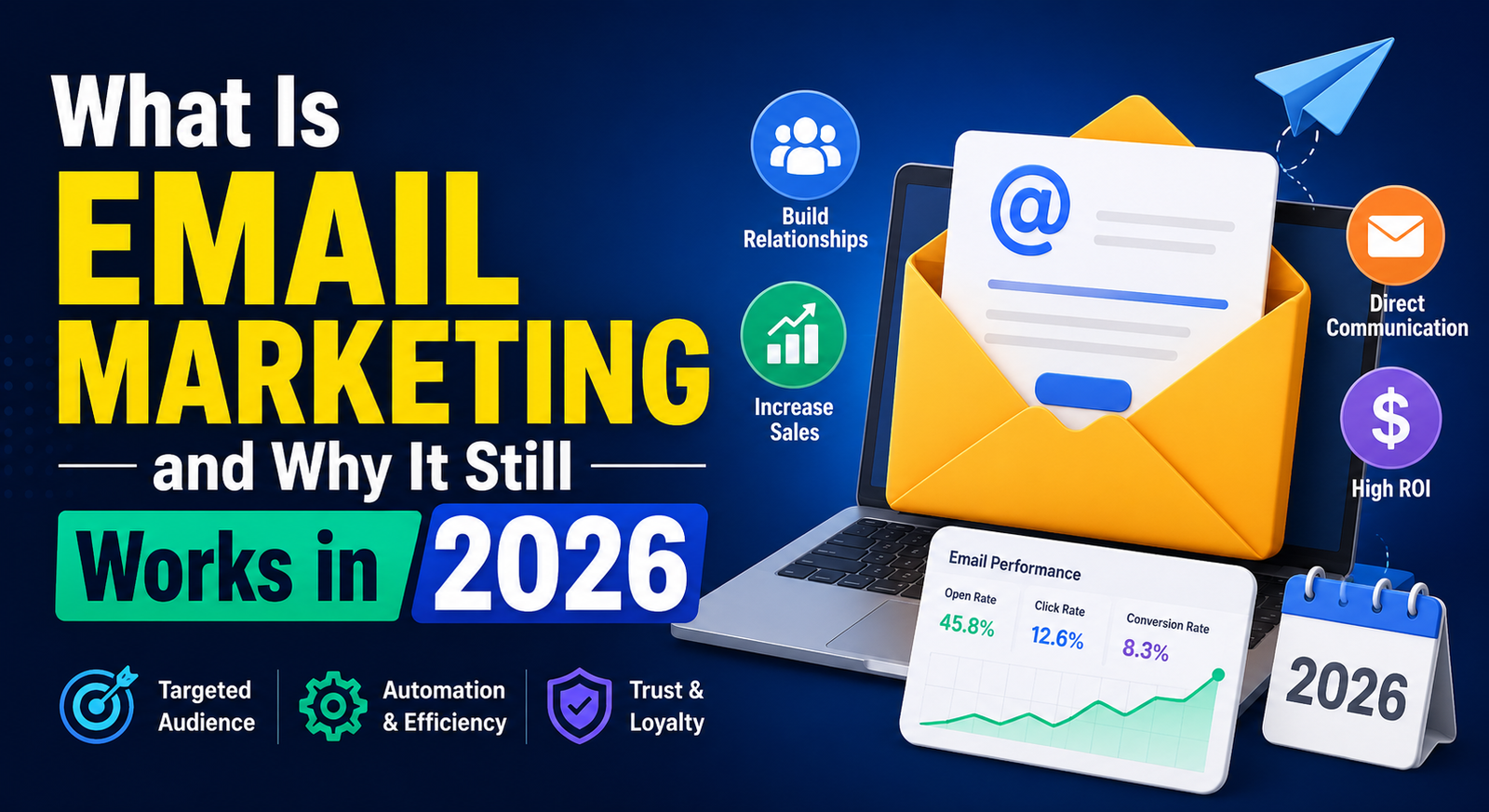
What Is Email Marketing and Why It Still Works in 2026
In 2026, email marketing is still one of the best ways for businesses to interact with consumers, attract new leads, and improve sales. Although there is a lot of talk about social media marketing, AI-powered ads, and viral videos nowadays, email marketing continues to be an essential tool. The fact is, it allows businesses to communicate with people directly through email newsletters rather than using unreliable social media algorithms.
Knowing how email marketing works and what makes it effective is helpful for any business, whether a blogger, an online store, a start-up company, or a well-established firm. This guide tells you everything you should know about email marketing in 2026.
What Is Email Marketing?
Email marketing is a type of digital marketing that involves sending emails to customers, subscribers, and potential buyers. Using email marketing, businesses communicate with people to promote their services or products, share valuable information, maintain relationships, and make money.
The primary idea behind email marketing is constant engagement with clients. Instead of posting something to their wall that they might not see, businesses use personalized messages delivered straight to users’ inboxes.
Email marketing encompasses:
- Promotional emails
- Welcome emails
- Newsletter marketing
- Product launches
- Discounts
- Abandoned cart emails
- Customer feedback surveys
- Informative content
- Event invitations
Modern-day email marketing campaigns are automated and utilize artificial intelligence to tailor emails according to the recipient’s behavior, interests, and engagements.
The Development of Email Marketing in 2026
Email marketing has undergone significant changes through the years. Initially, companies used to send the same email to numerous recipients without customizing it. This led to low engagement rates and spam complaints.
In 2026, email marketing has become more advanced, personalized, and automated. Using AI solutions, companies can:
- Customize subject lines
- Anticipate customer interests
- Schedule optimal sending time
- Automatically segment the target audience
- Get content suggestions
- Enhance the visual appeal of emails
- Analyze the performance of their email campaigns
That said, modern email marketing campaigns are characterized by high open rates, click-through rates, and increased levels of customer engagement.
Reasons Email Marketing Still Works in 2026
There are many people who wonder why email marketing is still relevant even in an era dominated by social media platforms. However, there are many factors that make email marketing campaigns effective.
Here are some reasons why email marketing still works in 2026.
1. Email Marketing Provides a Platform for Direct Communication
The main reason why email marketing works is due to the level of ownership provided by this strategy. Unlike other strategies, businesses that use email marketing do not have to rely on third parties in order to communicate directly to their customers.
For instance:
A post on a social media platform might be seen by just a fraction of its subscribers.
In email marketing, businesses can communicate directly to customers’ email accounts.
2. Email Marketing Has a High Return on Investment (ROI)
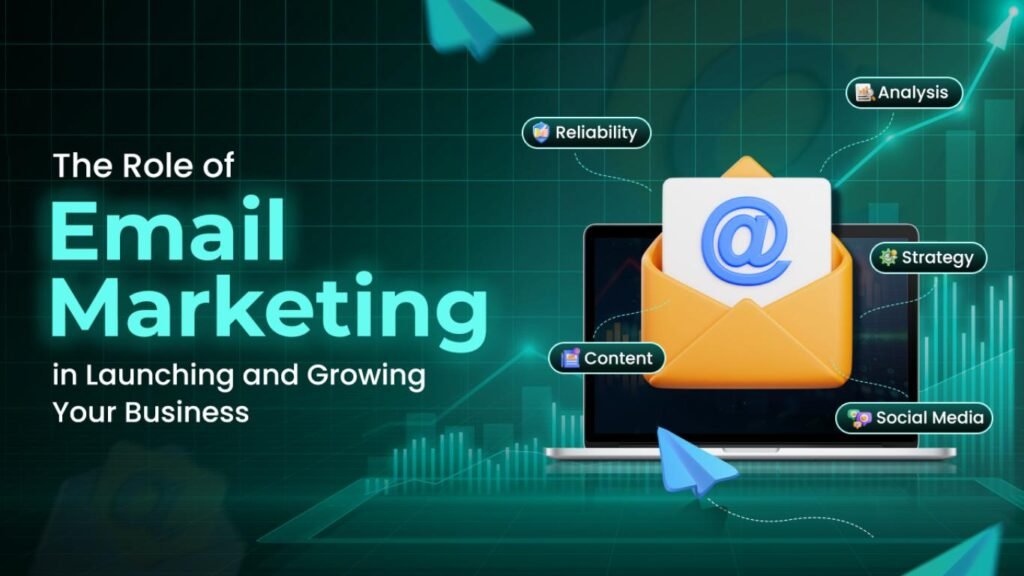
Despite the low costs involved in creating and implementing email marketing campaigns, email campaigns offer a high return on investment.
High ROI can be explained by the following factors:
- Low cost of campaigns
- Automation
- Repeat engagement
- Personalization
- Product promotion
Effective email marketing makes even smaller businesses with limited funds earn good profits.
3. Personalization Boosts Engagement
Modern consumers are used to personalized experiences. Generic marketing messages no longer work.
As of 2026, companies use personalized data to include:
- Names
- Product recommendations
- Shopping history
- Browsing habits
- Location
- Interests
With personalization, customers know that businesses pay attention to them.
Examples of personalization in emails are:
- Product recommendation according to the shopping history
- Birthday discounts
- Location-based offers
- Cart abandonment reminder
Personalization helps boost customer engagement and conversions.
4. Automation Saves Time and Makes Emails More Effective
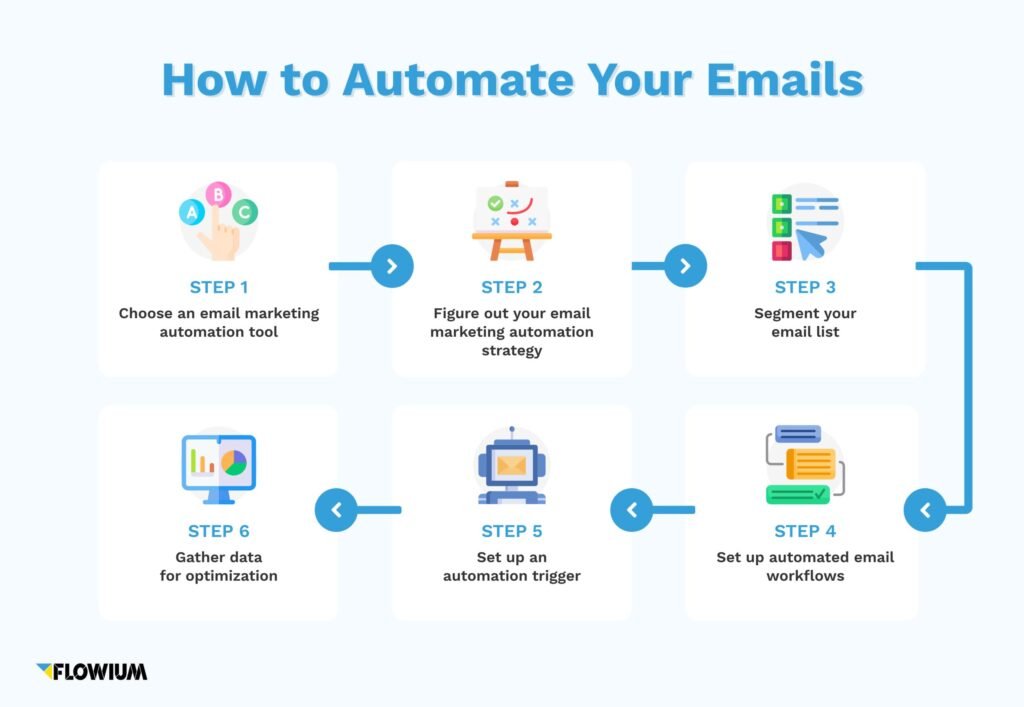
One of the most important aspects that contribute to email marketing success is automation.
Businesses can automate sending emails depending on specific triggers or time periods.
The following campaigns can be considered typical:
- Welcome emails
- Order confirmation emails
- Subscription renewal reminders
- Product follow-up emails
- Onboarding campaigns
Automation increases efficiency without compromising communication.
As an illustration, when a person subscribes to a newsletter, he or she will automatically receive:
- A welcoming message
- Educational materials
- Product suggestions
- Promotions
And all that without the need for daily manual effort.
5. E-mail Marketing Strengthens Relationship Building
E-mail marketing is not only associated with promoting products; it also involves relationship building with the audience.
Companies can use e-mails to:
- Educate the audience
- Provide useful information
- Support customers
- Give updates on industry developments
- Facilitate community involvement
By communicating frequently, companies maintain contact with their target audience.
People trusting a company are more likely to become loyal clients by doing the following things:
- Making subsequent purchases
- Recommend companies to others
- Stick with certain brands for years
One of the strongest benefits of e-mail marketing is building relationships.
Types of E-Mail Marketing Campaigns
Many types of e-mail marketing campaigns are employed by companies in 2026.
Welcome Emails
This type of emails is used right after people subscribe to a mailing list.
Such emails always:
- Introduce the company
- Set expectations
- Inform subscribers about something important
- Provide discounts or bonuses
The success rate of welcome emails is very high since subscribers are interested in what happens next.
Newsletter Emails
Newsletter emails provide subscribers with regular updates.
Companies may use newsletters to give:
- Company updates
- Blog posts
- Industry insights
- Tips and tutorials
- New products
Newsletters keep the audience engaged regularly.
Promotional Emails
Promotional emails are primarily about sales and offers.
Such emails might feature:
- Discounts
- Time-limited offers
- Product launches
- Holiday specials
- Flash sale offers
Successful promotional emails have compelling subject lines and calls to action.
Transactional Emails
Transactional emails occur as a result of customer activity.
Some examples include:
- Purchase confirmation emails
- Shipping notifications
- Reset password emails
- Account-related emails
These types of emails matter since clients expect timely responses.
Re-engagement Emails
Re-engagement emails address inactive subscribers.
Companies use re-engagement campaigns to:
- Retrieve lost customers
- Stimulate more activity
- Prevent unsubscribing
Re-engagement campaigns might be personalized and offer something extra.
Importance of Email Marketing to Businesses
Email marketing provides numerous advantages for businesses of all sorts.
Affordable Marketing
In comparison with other marketing methods like advertisements on TV or social media influencers’ endorsements, email marketing is exceptionally cheap.
Businesses get access to reaching thousands of people at minimum costs.
Thus, email marketing is ideal for:
- Startups
- Bloggers
- SMEs
- E-commerce sites
- More Accurate Audience Segmentation
Most email marketing services enable companies to segment audiences using behavior and preference data.
Segmentation might involve:
- Age segments
- Interests
- Purchase history
- Geographical information
- Activity level
Measurable Performance
Email marketing comes with extensive performance statistics for measuring success.
Performance statistics include:
- Open rate
- Click-through rate
- Conversion rate
- Bounce rate
- Unsubscribe rate
With such data, marketers can make their next campaign better.
Driving Website Traffic
Through email marketing, companies can get people to visit:
- Blog posts
- Product pages
- Landing pages
- Video content
- Online shops
Regular email marketing campaigns ensure consistent website traffic generation.
Better Customer Retention
It’s typically more expensive to acquire new clients than keep existing ones loyal.
Customer retention can be enhanced with email marketing.
The Role of AI in Email Marketing for 2026
There’s hardly an area where artificial intelligence doesn’t apply to email marketing.
AI makes campaign optimization easier and faster for marketers.
AI-Powered Personalization
AI uses data on customers to send highly targeted information.
Some examples include:
- Personalized product suggestions
- Dynamic content in emails
- Recommendations
- Predictive offers
Every email sent by AI is personalized according to customer needs.
Smart Subject Line Generation
AI is used in generating optimized subject lines intended to increase open rates.
It involves analyzing:
- Emotional triggers
- Customer preferences
- Historical engagement data
A better subject line means higher visibility.
Predictive Analytics
Predictive analysis makes use of artificial intelligence.
It enables businesses to:
- Identify likely buyers
- Detect potential churns
- Choose optimal sending hours
- Select high-converting segments
Predictive analytics make marketing processes more efficient.
Content Creation
AI-driven content writing assistants enable organizations to create:
- Email content
- Product descriptions
- Headlines
- Calls to action
This reduces effort and improves consistency.
Best Practices for Email Marketing in 2026
Email marketing campaigns that will prove successful need to adhere to certain best practices.
Build a Great Email List
Do not buy email lists from third parties.
Create your list of subscribers through organic means such as:
- Sign-up forms on website
- Lead magnets
- Download offers
- Webinars
- Blog subscriptions
Quality subscribers are always preferable to having big lists of inactive emails.
Write Good Subject Lines
Subject lines play a crucial role in determining open rates.
Effective subject lines should be:
- Brevity
- Clarity
- Engaging
- Relevant
For example:
“Exclusive Offers Within”
5 Tips for Growing Your Business Quickly
- New Products You’ll Love”
- Optimize for Mobile Devices
- Mobile Optimization
Readers usually open emails on their phones.
Email marketing design for mobile devices must feature:
- Responsive designs
- Short paragraphs
- Easy-to-read fonts
- Clear buttons
Such optimization greatly boosts user experience.
Implement Clear Calls to Actions
All emails should always have an action point.
Examples include:
- Shop Now
- Learn More
- Get Your Free Guide
- Register Now
Effective calls to actions boost conversion rates.
Testing and Improving Email Campaigns
Email marketing success requires constant testing.
Tests can include:
- Different email subject lines
- Different designs
- Differing images
- Different calls to actions
- Different sending times
Such tests can help identify the most effective strategies.
Common Mistakes in Email Marketing to Avoid
Companies fail by not following important email marketing tips.
Some common mistakes made by companies include:
- Sending excessive emails
- Failing to personalize emails
- Writing misleading subject lines
- Using purchased email lists
- Not designing for mobile devices
- Sending irrelevant emails
Preventing these mistakes ensures more effectiveness.
Email Marketing Beyond 2026
Email marketing technology will definitely advance beyond 2026.
New advancements may include:
- Increased automation powered by AI
- Interactive emails
- Voice-based email reading technology
- Predictive personalization
- Improved data privacy
- Dynamic content creation
With the advancement of technologies, email marketing will become even more personalized and efficient.
Why Businesses Need to Utilize Email Marketing
The failure of business enterprises to use email marketing can cost them greatly.
Benefits of email marketing include:
- Increased income generation
- Customer loyalty cultivation
- Brand recognition development
- Improved customer communication
- Repeat customer sales
While social media channels are often unpredictable and unreliable due to constant changes in visibility, email marketing presents a stable form of communication channel.
This is the reason why email marketing continues to be a priority investment in business in 2026.
Conclusion
Knowledge of email marketing and its relevance in 2026 is vital for businesses and digital marketers in today’s world. Although the world is now dominated by AI and social media as well as video channels, email marketing still proves itself to be an effective communication tool.
Personalization, automation, cost-effectiveness, and high ROI make email marketing highly beneficial for any business enterprise. With modern technological advancements like AI-driven software tools, email marketing is becoming more advanced and more efficient.
Those enterprises which utilize good-quality email lists and personalization will enjoy success through email marketing in the future.
![Perform[cb] Affiliate Marketing Review 2026: Features, Offers & Earnings](https://ofmaq.online/wp-content/uploads/2026/06/ChatGPT-Image-Jun-11-2026-05_29_46-AM-768x419.png)