

10 Best Website Builders for Large Businesses
For a large business, the website builder must have features that help in marketing activities, customer interaction, CRM, eCommerce, data analysis, SEO, and enterprise processes.
Using the wrong website building platform will cause you to lose out on your potential. But with the right one, you will be able to build a website that will act as the backbone of your organization’s digital footprint.
Let us look at the 10 best website builders for large enterprises in 2026.
1. WordPress – Best for Enterprise Flexibility
WordPress is one of the best site creation tools globally. The reason behind its popularity among large enterprises is that WordPress offers full customizability and scalability.
The difference between WordPress and other platforms is that WordPress gives the business ownership of the entire website. This platform facilitates development, SEO, integration, and enterprise-level hosting.
Why Do Large Enterprises Go for WordPress?
- Complete customizability
- Open-source platform
- Many plugins available
- SEO capability
- Big developer community
- Enterprise hosting capabilities
Big enterprises usually pair their websites with premium hosts to guarantee fast performance and security.
Key Features
- Customizable themes
- WooCommerce compatibility
- APIs
- Multilingual sites
- Sophisticated content management
- Role-based user permissions
Pros
- Complete customization capabilities
- Superior SEO features
- Very scalable
- Rich plugin architecture
Cons
- Needs maintenance
- Compatibility issues possible with plugins
- Can be difficult without developers
WordPress is perfect for companies that require total control.
2. Webflow – Best for Design-Focused Businesses
The software provides the perfect balance between designing tools and the coding side. Webflow is popular among big firms since it gives marketing professionals the opportunity to develop websites independent from developers.
This solution is ideal for SaaS businesses, start-ups, agencies, and modern enterprises.
Why Webflow Rocks
- Professional flexibility in design
- Great loading times
- Built-in CMS
- Good SEO optimization
- Enterprise hosting
Features
- Drag and drop builder
- Responsive design tools
- CSS Visual Editor
- Collaboration
- Collections in CMS
- Hosting is included
Pros
- Good designs
- High speed performance
- Good coding output
- Animation support
Cons
- A steep learning curve for new users
- Not as many apps available in the marketplace
- Pricing becomes higher with scale
Webflow will work great for those business that focus on design performance.
3. Shopify Plus – Best for Enterprise eCommerce
Shopify Plus is the enterprise solution of Shopify. It is ideal for large online stores and expanding brands.
Why Shopify Plus is Ideal for Large Businesses
- Can manage sudden spikes in traffic
- Has enterprise-level customer service
- Allows multi-store management
- Has advanced checkout functionality
- Has a rich application store
Key Features of Shopify Plus
- Infinite product management
- Selling capabilities globally
- Inventory management system
- Marketing automation tools
- Application programming interface integration
- Responsive design
Pros
- Ideal for online sales
- Great hosting services
- Quick installation process
- Secure
Cons
- Expensive monthly fees
- Less customizable than WordPress
- Possible transaction fees
- Shopify Plus is ideal for enterprise-level online stores.
4. Wix Studio – Best for Easy Enterprise Website Building
Beyond mere web development, Wix now provides advanced solutions for business agencies and enterprises.
Its purpose is to provide easy website construction without compromising on the quality.
Reasons for Business Adoption of Wix Studio
- Quick set-up process
- AI design suggestions
- Cloud hosting services
- Collaboration among teams
- Editing ease
Key Features
- Drag-and-drop interface
- Website statistics analysis
- Search engine optimization tools
- Marketing integration
- Customer relationship management
- Responsive design templates
Pros
- User-friendly interface
- Rapid website implementation
- Advanced functionalities built in
- Effective customer service
Cons
- Lack of flexibility in the back end
- Heavier sites might slow down performance
- Fewer migration options
Businesses can benefit from using Wix Studio because of its user-friendly nature and advanced features.
5. Squarespace – Best for Corporate Branding
For professional templates, Squarespace is famous for its elegant designs and layouts.
Companies usually opt for Squarespace whenever there is a need for branding and aesthetic appeal.
Advantages of Using Squarespace
- Elegant templates
- Advanced content management
- Hosting services included
- Marketing integrations
Key Features
- Responsive design
- SEO settings
- Blogging tools
- Analytics dashboard
- E-commerce functionalities
Pros
- Modern and elegant designs
- Simple editing
- Great branding
- Effective hosting
Cons
- Inflexibility in customization
- Limited number of extensions
- Not suitable for very complicated websites
Squarespace is useful for service-based and luxury businesses.
6. Drupal – The Best for Complex Enterprise Sites
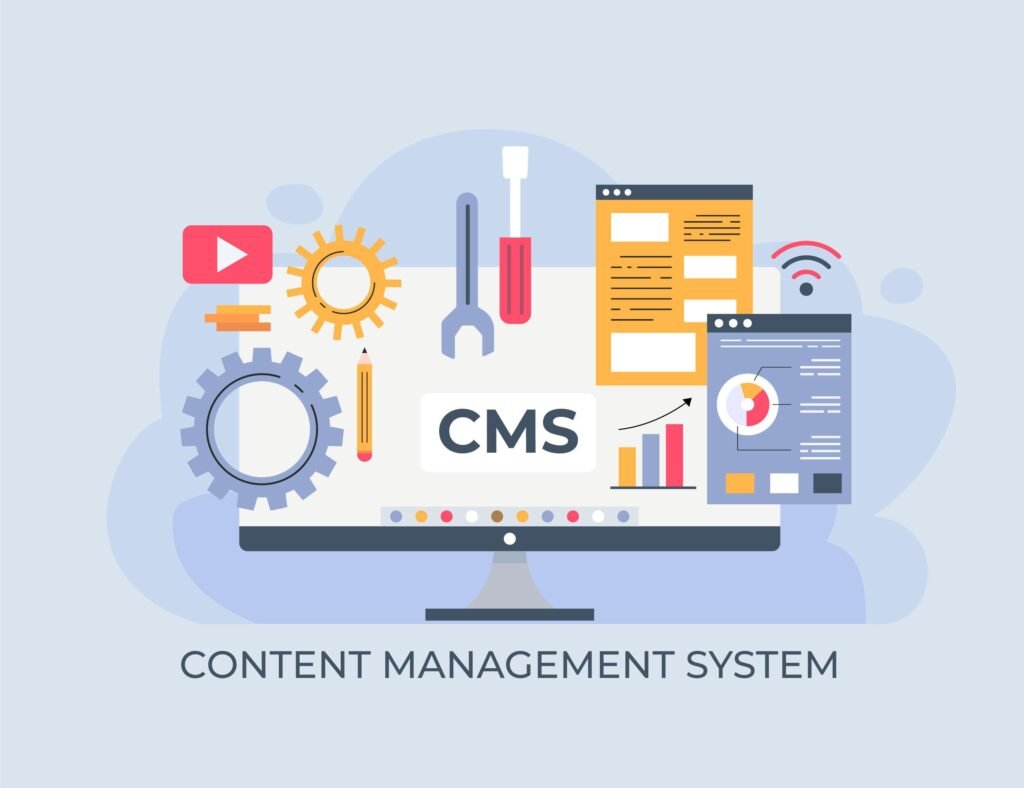
Drupal is a highly sophisticated CMS, which can be implemented by large organizations, government bodies, and even educational institutions.
This software is highly customizable and made specifically for complex digital ecosystems.
Why Do Enterprises Choose Drupal?
- Sophisticated security
- Scalable
- Content structuring options
- Multilingual
Key Features
- Role-based permissions
- API-first approach
- Enterprise-level security
- Handling large volumes of content
Pros
- Highly secured
- Very scalable
- Perfect for complex projects
- Effective content management
Cons
- Technical expertise needed
- Developer-oriented approach
- Time-consuming implementation
Drupal CMS is perfect for companies that have a large technical staff.
7. HubSpot CMS – Best for Integrating Marketing Capabilities
HubSpot CMS is created specifically for enterprises that depend a lot on inbound marketing and generating leads.
This CMS is integrated with CRM, email marketing, automation, and analytics software.
Why Do Large Businesses Prefer HubSpot CMS?
- CRM integration
- Marketing automation
- Analytics tools
- Personalization capabilities
Key Features
- Drag-and-drop editor
- SEO recommendations
- Dynamic content management
- Smart personalization
Pros
- Marketing capabilities
- CRM integration
- Easily manageable
- Good for lead generation
Cons
- Expensive for large businesses
- No design flexibility
- Loses its capabilities when not integrated with other HubSpot tools
HubSpot CMS is good for marketing-related businesses.

8. Adobe Experience Manager – Best for Enterprise Content Management
Adobe Experience Manager (AEM) is an expensive enterprise-level platform designed for large corporations.
This platform merges web development and digital asset management into one solution.
Why Enterprises Choose AEM?
- Enterprise-level personalization
- Content workflow automation
- Global content management system
- Cloud-based architecture
Features to Consider
- Digital asset management
- AI-powered content distribution
- Multiple sites management
- Personalized experience creation
Bros
- Incredibly powerful
- Perfect for global companies
- Seamless integrations
- Very scalable
Cons
- Very costly
- Needs enterprise-level expertise
- Complicated deployment
Adobe Experience Manager suits big multinational enterprises.
9. BigCommerce Enterprise – Best for Large eCommerce Sites
BigCommerce Enterprise is another advanced platform aimed at large eCommerce corporations.
It provides solid product management, robust integrations, and unlimited scalability.
Why BigCommerce Is Popular?
- Robust eCommerce features
- High-performance hosting
- Multi-channel sales strategy
- SEO-friendly site structure
Features to Consider
- Product catalogs management
- Checkout process optimization
- Payment gateway integration
- Analytics dashboard
Pros
- Best for enterprise-level online stores
- Superior SEO
- Scalable infrastructure
- Excellent customer support
Cons
- Learning curve involved
- Enterprise-level pricing
- No flexible themes
BigCommerce Enterprise is suitable for large-scale product-based businesses.
10. Duda – The Choice for Agencies and Teams
Duda is a website building platform that caters to agencies and enterprise-level teams.
It provides white labeling, collaboration, and responsiveness capabilities.
Reasons Why Big Companies Prefer Duda
- Quick site creation
- Collaborative team features
- Client handling
- Responsiveness
Features of Duda
- Drag & Drop builder
- White labeling
- Content manipulation
- Permissions for team
Pros
- Quick workflow
- Intuitive interface
- Collaboration capabilities
- Responsive design
Cons
- Not as flexible as WordPress
- Fewer plugins
- Less integration with enterprise systems
Duda is perfect for agencies and businesses with multiple websites.
Comparison Table
| Website Builder | Best For | Ease of Use | Customization | Scalability |
| WordPress | Flexibility | Moderate | Very High | Excellent |
| Webflow | Design | Moderate | High | Excellent |
| Shopify Plus | eCommerce | Easy | Medium | Excellent |
| Wix Studio | Simplicity | Very Easy | Medium | Good |
| Squarespace | Branding | Easy | Medium | Good |
| Drupal | Complex Sites | Difficult | Very High | Excellent |
| HubSpot CMS | Marketing | Easy | Medium | Excellent |
| Adobe Experience Manager | Enterprise Content | Difficult | Very High | Excellent |
| BigCommerce Enterprise | Online Stores | Moderate | High | Excellent |
| Duda | Agencies | Easy | Medium | Good |

How to Choose the Best Website Builder
There are a few key things to consider before choosing a website builder for your business.
1. Scalability
Select a website builder that can accommodate future traffic increases.
2. Team Collaboration
Enterprise websites may be created by designers, marketers, and developers.
3. Security
Secure hosting and protection from cyber attacks are critical for large businesses.
4. Integrations
Verify integration with your CRM, analytics, and automation software.
5. Budget
Larger-scale platforms may have licensing, hosting, and development costs.
Join Our Youtube Channel as to get information
Conclusion
It’s crucial for large businesses to choose a website builder beyond the basic drag-and-drop interface.
Depending on your needs and budget, the ideal website builder varies.
- WordPress is great for its versatility.
- Webflow is fantastic for companies with design expertise.
- Shopify Plus is best for eCommerce businesses.
- Wix Studio makes it easy to create a website.
- Squarespace is perfect for branding.
- Drupal can manage complicated websites.
- HubSpot CMS enables marketing capabilities.
- Adobe Experience Manager manages enterprise content.
- BigCommerce Enterprise is an excellent online sales solution.
- Duda is great for agencies and teams.
The proper website builder could help enhance customer experiences and marketing efforts.