
What is Artificial Intelligence (AI) in Business?
What is Artificial Intelligence (AI) in Business?
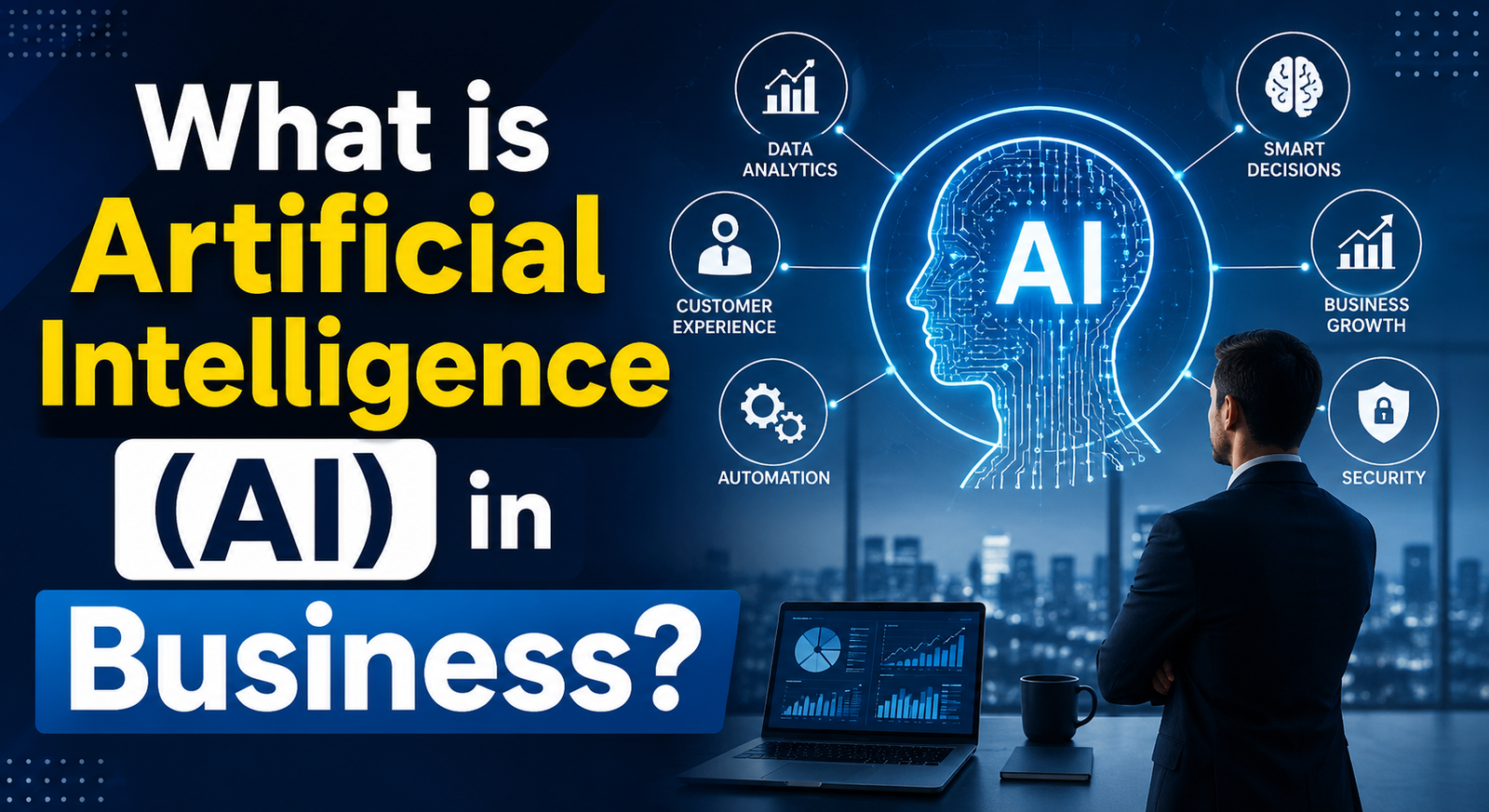
Artificial Intelligence (AI) in Business has revolutionized the operations, decision-making processes, and customer service of businesses. Today, whether it is a small startup or a large corporation, businesses are increasingly leveraging the capabilities of AI tools and technologies to make their operations more efficient, cost-effective, and profitable. In 2026, AI is one of the most sought-after technologies for businesses.
To put it simply, Artificial Intelligence is nothing but computer software capable of carrying out tasks that generally require human intelligence. Such tasks may involve learning, solving problems, analyzing information, communicating through natural languages, reasoning, and making sound decisions. When this technology is used by companies, it helps them perform smarter and more efficiently.
Today, businesses are producing an overwhelming amount of data. With AI tools, they can analyze this data at lightning speed to obtain valuable insights for their decision-making. Regardless of whether you are in the field of customer service, marketing, sales, healthcare, manufacturing, finance, or e-commerce, AI is playing a big role.
This blog post provides all the information you should know about Artificial Intelligence in Business.
Understanding Artificial Intelligence (AI)
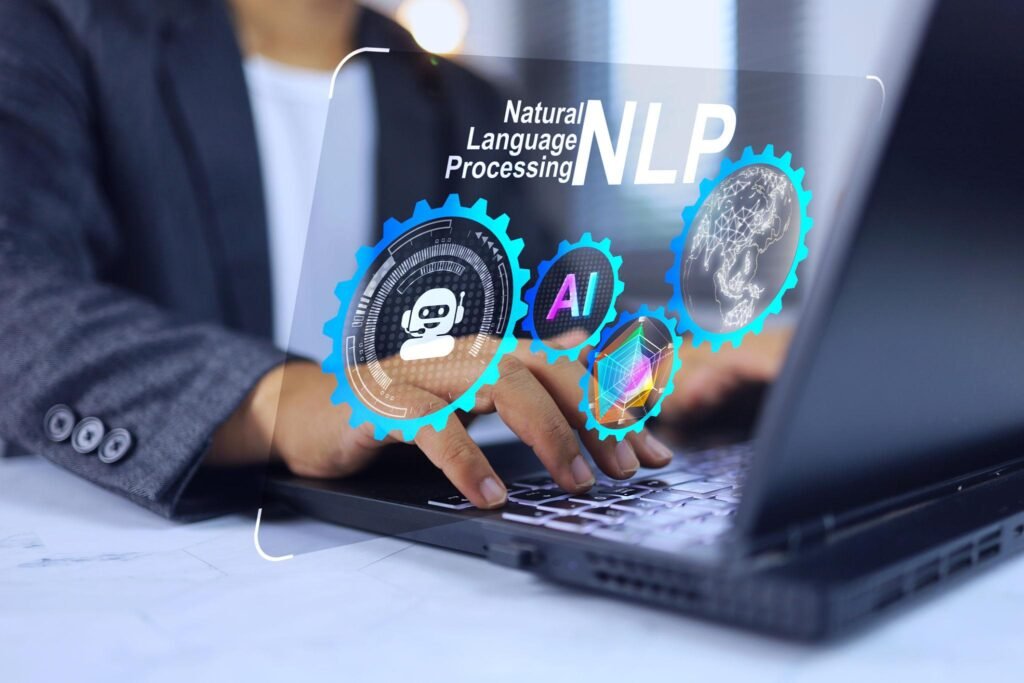
Artificial Intelligence refers to a discipline within computer science concerned with designing intelligent software or machines. An AI application learns from experience without requiring continuous programming by humans.
Examples of AI technology include:
- Machine learning
- Natural language processing
- Computer vision
- Robotics
- Predictive analytics
- Deep learning
- Chatbots/Virtual assistants
Such technologies enable organizations to automate processes, gain insights about customer behavior, prevent fraudulent activities, optimize processes within the business chain, and even enhance customer satisfaction.
For instance:
Retailers apply AI in product recommendations to customers online.
Banks use AI in detecting financial fraud in their systems.
Healthcare organizations apply AI in analyzing patient records.
Marketers utilize AI in designing ads to target specific audiences.
The good thing about AI is that it is no longer used exclusively by big organizations. Even small and medium enterprises are adopting AI applications today.
How Artificial Intelligence Works in Business

Artificial Intelligence operates on the basis of data collection and data analysis. AI technologies identify certain patterns in the data and based on them, the technology makes a prediction or decision.
Generally, the following processes occur in most cases:
1. Data Collection
Data is collected from customers, online platforms, marketing software, websites, and business operations.
2. Data Processing
AI technologies process the data to enable further analysis.
3. Machine Learning
The machine learning algorithm analyzes the processed data to identify certain behaviors or patterns in the dataset.
4. Decision-Making
Based on the identified data, the technology makes a prediction or suggestion.
5. Iterative Process
AI systems develop over time as they gain more experience with additional data.
In practice, the customer service AI-powered chatbot identifies patterns of past conversations with customers, which enables it to respond more efficiently in future encounters.
Benefits of Artificial Intelligence in Business
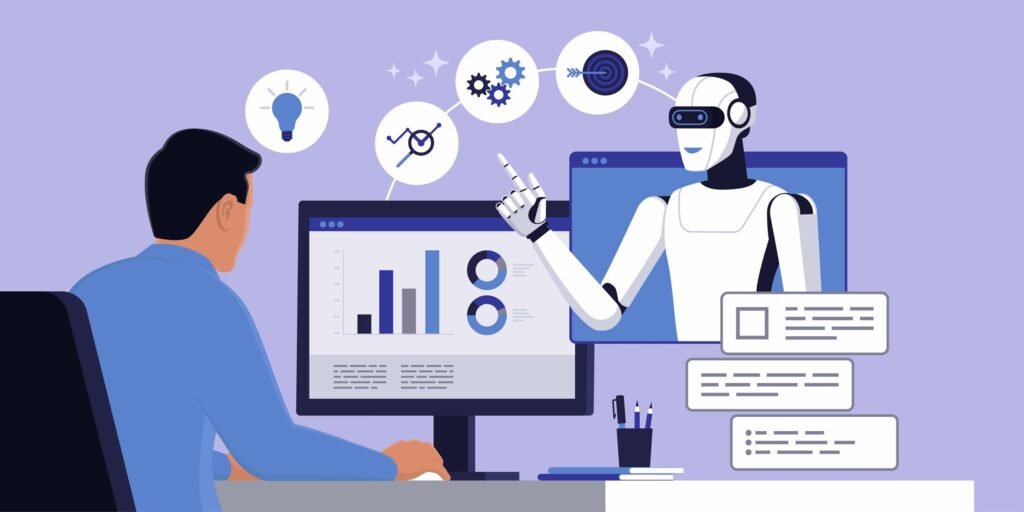
There are several reasons for using Artificial Intelligence solutions by businesses. These tools help enterprises acquire competitive benefits.
1. Increased Efficiency
The use of Artificial Intelligence allows businesses to automate routine operations and save time on them.
Such activities are related to:
- Data inputting
- Sorting emails
- Processing invoices
- Inventory management
2. Improved Decision-Making
Businesses can receive timely analysis of large volumes of data from all sources.
For instance:
- Forecasting customer demand
- Recognizing emerging trends
- Recognizing risks for businesses
3. Improved Customer Service
Companies that have implemented AI solutions can deliver more personalized services and faster support.
This is achieved with:
- AI chatbots
- Recommendations
- Voice assistants
- Smart customer support solutions
4. Saving on Costs
Automated procedures reduce expenses connected to labor and human mistakes.
5. Better Sales and Marketing Performances
Marketers can benefit from Artificial Intelligence solutions because they can better understand their customers.
This results in:
- Targeted marketing campaigns
- Improved lead acquisition
- Effective email marketing solutions
- Forecasting of sales
6. Fraud Prevention
Financial companies use Artificial Intelligence technologies to identify any frauds or unusual actions.
7. Accelerated Business Processes
AI programs work continuously without any pauses, thus enabling business to run faster.
Types of Artificial Intelligence Applied to Business Purposes
Various kinds of AI technologies are applied across industries.
Machine Learning (ML)
Machine learning allows computers to learn from experience.
Applications in business include:
- Product recommendation
- Fraud detection
- Demand forecasting
- Natural Language Processing (NLP)
NLP helps computer understand human languages.
Applications in business include:
- Chatbot
- Virtual assistant
- Language translation
- Sentiment analysis
- Computer Vision
Computer vision helps machines process images and videos.
Applications in business include:
- Facial recognition
- Quality control in manufacturing
- Medical imaging
- Robotics
Robotics uses AI for machines to carry out certain tasks.
Applications in business include:
- Warehousing robots
- Manufacturing robots
- Delivery robots
- Predictive Analytics
Predictive analytics uses AI to predict future trends.
Applications in business include:
- Sales forecasts
- Customer behavior analysis
- Inventory planning
- Applications of AI in Businesses
AI has found its applications in nearly all industries today.
Applications of Artificial Intelligence in Business
AI is being used in almost every industry today.
AI in Customer Support
Companies are employing AI-based chatbots and virtual assistants to answer customers’ inquiries instantaneously.
Advantages:
- 24/7 customer service
- Immediate feedback
- Cost savings on human resources
Popular AI-powered platforms in customer service are:
- OpenAI
- Zendesk AI
- Intercom
- AI in Marketing
AI allows marketers to study their audience and run effective marketing campaigns.
Use cases in business marketing include:
- Recommendation
- Content creation
- Social media analysis
- Customer targeting
Popular AI Marketing Tools:
- HubSpot
- Jasper AI
- Canva AI
- AI in Finance
AI in finance companies for:
- Detection of frauds
- Scoring credit
- Risk assessment
- Trading algorithms
The banks use AI to ensure safety and better customer experience.
AI in Healthcare
Healthcare businesses apply AI for:
- Diagnosis of illnesses
- Medical imagery
- Development of medicine
- Monitoring of patients
AI may assist physicians in making timely and correct decisions.
AI in Retail and E-commerce
Online retailers apply AI for:
- Product recommendations
- Consumer behavior analysis
- Dynamic pricing
- Inventory control
Big retailers like Amazon and Alibaba use AI extensively.
AI in Manufacturing
Manufacturers use AI in robots and systems predicting equipment breakdowns.
Advantages:
- Minimal downtime
- Enhanced quality of the product
- Increased speed of production
- AI in Human Resources (HR)
HR uses AI for:
- Resumes screening
- Workforce data analysis
- Recruitment processes automation
- Analysis of employee engagement
- Examples of the Use of AI in the World of Business
A great number of companies utilize Artificial Intelligence.
Real-World Examples of AI in Business

Many major companies use Artificial Intelligence successfully.
Amazon
For Amazon, applications of artificial intelligence include recommending products, automating warehouses, and optimizing deliveries.
Tesla
In the case of Tesla, the AI applications include self-driving technology and vehicle automation.
Netflix
For Netflix, artificial intelligence applications include movie and TV show recommendations.
The applications of artificial intelligence by Google include search engine optimization, cloud computing, advertising, and voice assistants.
Microsoft
Applications of artificial intelligence at Microsoft include cloud services, productivity software, and cybersecurity solutions.
Challenges of Artificial Intelligence in Business
While there are various advantages of AI in business, there are also several challenges that businesses need to deal with.
High Implementation Costs
Implementation of artificial intelligence can be very costly.
Data Privacy Issues
AI collects and processes huge amounts of data. Therefore, there is a need to protect users’ privacy.
Lack of Skilled Professionals
The shortage of skilled professionals is another challenge businesses may experience in their implementation of AI.
Job Displacement
Some jobs will become obsolete due to automation and may cause issues for workers.
Biases and Ethical Issues
AI systems may become biased against certain individuals or communities. Therefore, ethical considerations must be made.
The Future of Artificial Intelligence in Business
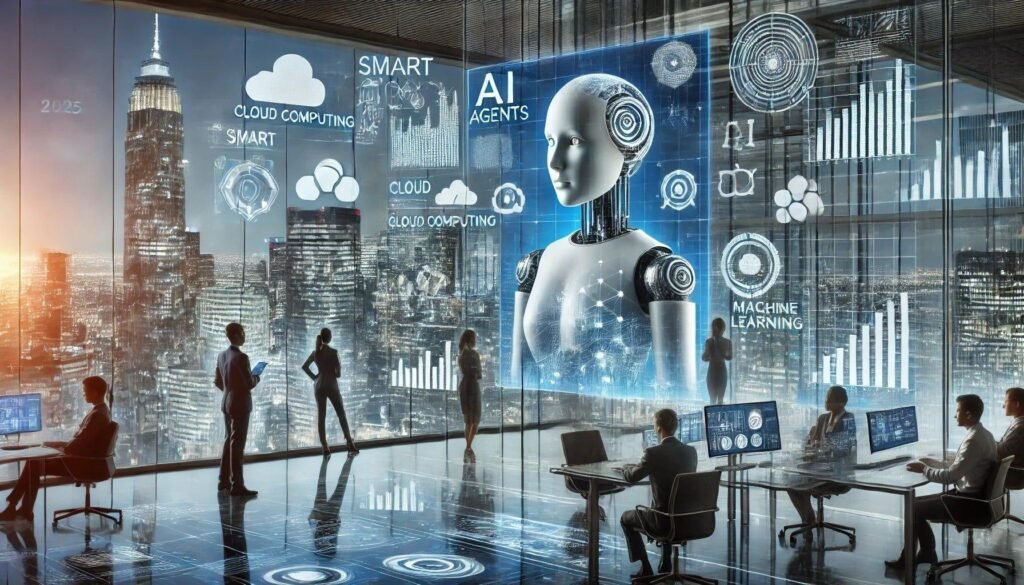
Experts suggest that AI technology will impact industries as follows:
Hyper Automation
The integration of AI and robotics will automate complex operations in businesses.
Personalized Experiences for Customers
AI technologies will offer customized services and advice to customers.
Decision Making Using AI
AI-powered decision-making will play a significant role in helping executives make informed strategic decisions.
Cyber Security
AI systems will have improved abilities to protect from cyber attacks.
AI Tools for Remote Work
AI will help enhance productivity and facilitate collaboration between remote workers.
Generative AI Expansion
Tools powered by AI will be able to produce articles, images, video content, and even software codes.
Some examples of popular generative AI tools include:
- ChatGPT (OpenAI)
- Google Gemini
- Claude AI
Why Businesses Must Invest in AI
If you overlook the use of AI tools for your business, then you will end up losing against your competition. The use of AI is mandatory in several sectors nowadays.
Reasons for investing in AI include:
- Increased efficiency
- Improved customer experience
- Increased profitability
- Competitive edge
- Rapid innovation
Improved business intelligence
Even small businesses can integrate the use of AI technology into their operations for activities such as:
- Social media management
- Customer service
- Email marketing campaigns
- Website optimization
- Content production
How Small Businesses Can Adopt AI Technology
Small businesses don’t require a lot of money to incorporate AI into their operations. They should start using low-cost AI applications and scale up gradually.
Start with Automation
Employ AI tools to automate monotonous tasks like:
- Email response
- Appointment setting
- Live chat assistance
- Employ AI Marketing Software
Some uses of AI in marketing include:
- Article creation
- Social media posting
- Advertisement campaigns
- Analyze Client Data Using AI
AI analytics software can give insight into client behavior and optimize the product accordingly.
Enhance Client Service Using Chatbots
AI chatbots can help respond quickly to customers’ queries.
Go For Cloud AI Solutions
Many cloud computing services enable small businesses to access AI technology without any high-cost infrastructure.
Some examples of popular cloud-based AI platforms include:
- Google Cloud AI
- Microsoft Azure AI
- AWS AI
AI Trends Businesses Must Look Out For in 2026
There are several noteworthy AI trends that will dominate businesses in the coming years.
Content Generation Using AI
Businesses adopt AI to create articles, videos, images, and ads.
Voice AI Technology
Advancements are being made in voice assistants and speech recognition technology.
AI and Cybersecurity
AI can help businesses detect security risks and strengthen cybersecurity solutions.
AI & Big Data Analysis
The power of AI and big data analysis can give more meaningful insights about business performance.
AI for Sustainability
Companies use AI to reduce energy consumption and improve environmental sustainability.
Is Artificial Intelligence Safe for Businesses?
Artificial Intelligence could be considered safe when businesses utilize it properly. They should:
- Ensure customer data security
- Implement proper AI solutions
- Track AI decision-making process
- Stick to ethical principles
Moreover, governments and institutions have started developing certain regulations regarding AI usage.
It would be reasonable for businesses to combine humans and artificial intelligence to minimize potential dangers and mistakes.
Conclusion
Artificial Intelligence in Business is revolutionizing the modern age. These AI tools and techniques can assist firms in automation, analysis, and increasing productivity. Artificial Intelligence is being applied to a wide range of industries from health care to manufacturing and beyond.
Those organizations which embrace AI will have a distinct competitive edge in terms of efficiency, cost savings, and decision-making ability. While there are some obstacles like data privacy and the costs involved, the benefits of utilizing AI far outweigh the disadvantages.
The evolution of Artificial Intelligence technology will continue into 2026 and even beyond, and it will be critical for firms to leverage AI to remain relevant and competitive in the coming years. No matter whether you are a startup founder, a marketing professional, an entrepreneur, or an executive, it is important to know about AI in business.
AI in business is not something in the future, but it has arrived.