

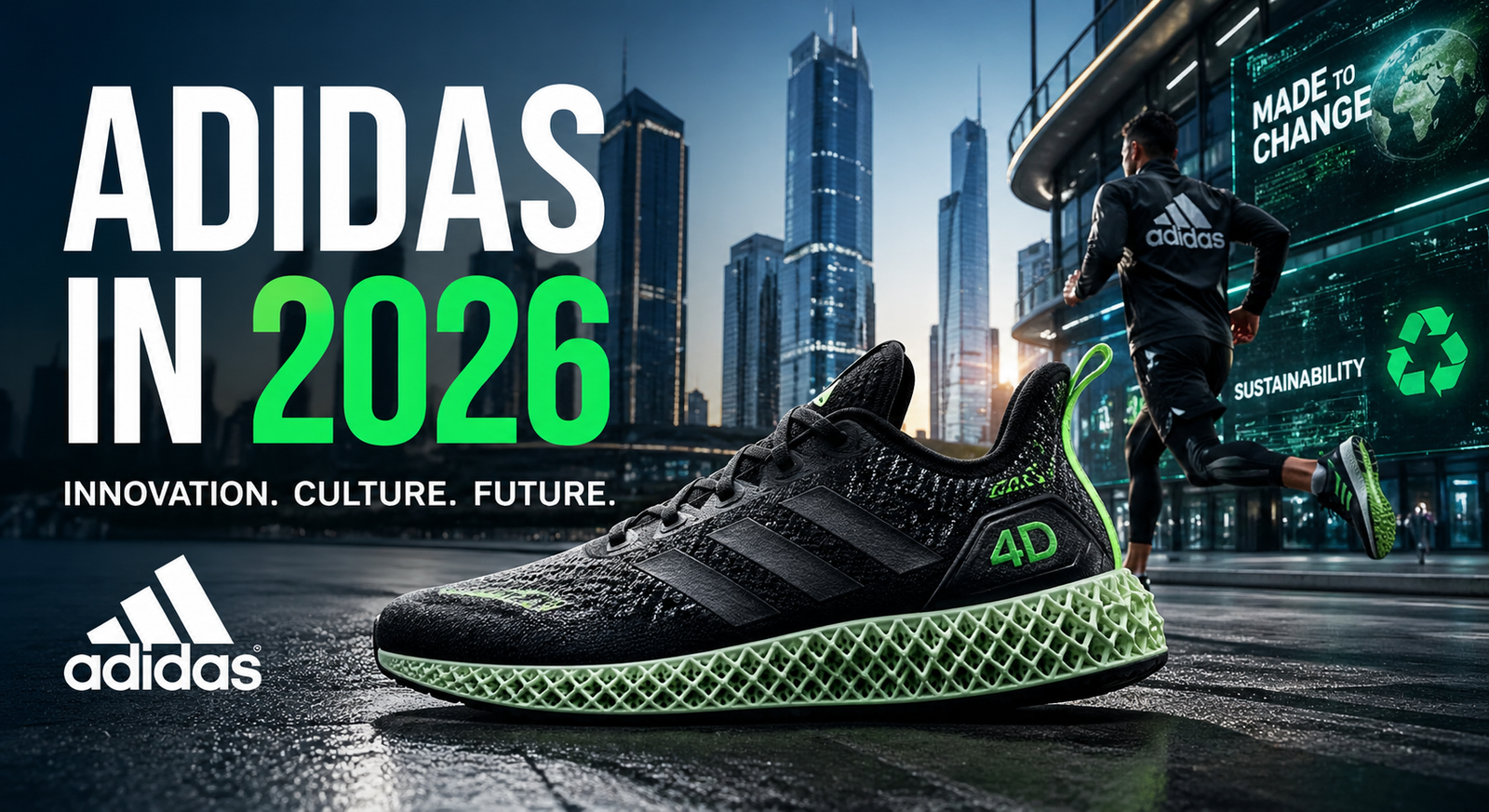
Adidas in 2026: Innovation, Culture, and the Future of Sportswear
Introduction
Adidas is one of the names in the world of global sportswear that carries an immense history and legacy in terms of quality and innovations. In 2026, the brand stands on the verge of many changes that will shape the future of sports and fashion. Initially associated solely with high-performance shoes, Adidas has transformed into a multilayered brand that impacts various industries and trends on a worldwide scale.
It has become an inseparable part of not only professional athletes but also streetwear culture of regular people. Yet, what makes Adidas who it is today and where is it heading in the future? This comprehensive analysis sheds light on Adidas’ past, present, and potential future path in the sportswear industry of 2026.

A Legacy Built on Performance
Established in 1949 by the visionary Adolf Dassler in Herzogenaurach, Germany, Adidas has always focused on producing the highest quality athletic footwear for professional athletes. In its early years, the company made its name known by sponsoring athletes that wore its shoes and won multiple times during international competitions.
Throughout years, Adidas grew from a brand dedicated solely to performance shoes into a provider of sports equipment, including different clothing lines.
The famous three stripes were initially added as a way of providing more support; they have become one of the most recognizable brands across the globe. They symbolize much more than just performance today: they stand for quality, authenticity, heritage, and style.
Adidas in 2026: The Modern Day Powerhouse
In 2026, Adidas competes with industry leaders such as Nike and Puma and operates as a global sportswear giant. It is present in over 160 countries thanks to its wide and growing retail networks and online presence.
The thing that makes Adidas unique is its innovative capacity combined with cultural significance. It has become much more than just a sportswear brand.
Cutting-Edge Innovations
As a global brand focused on innovation, Adidas does not cease improving its technologies that make sports better.
Boost and Further Advances
Boost technology introduced by Adidas made its running shoes unique due to its high-level performance. Even in 2026, Adidas still relies on Boost technology in order to create top-notch products.
4D Printing Midsoles
Perhaps the most innovative technology used by Adidas is its 4D printing midsole. Using digital light synthesis, Adidas produces customized midsoles that ensure improved performance.
Smart Wearables and AI Integration
Another area where Adidas sees growth potential is artificial intelligence and wearables. Smart shoes and clothing which help monitor training performance and avoid injuries are becoming more and more widespread.
Sustainability: From Initiative to Identity
By 2026, sustainability will no longer be seen as an additional initiative but will become one of the cornerstones of Adidas’s identity.
Recycled Materials
Adidas has vowed to utilize recycled materials in the production of the majority of its products. Partnerships with ecological organizations enabled Adidas to create shoes out of ocean plastics and other sustainable materials.
Carbon Reduction Goals
Adidas aims to decrease its carbon emissions both during the manufacturing process and throughout its logistics operations.
Circular Economy
Moreover, Adidas is implementing the strategy of designing items which could be easily recycled and repurposed after serving their primary function.
Cultural Influence and Streetwear Dominance
Adidas managed to make the leap into the cultural sphere by combining sports and culture in its products.
The Streetwear Movement
The movement towards streetwear has been a big part of how Adidas has built its identity over time. Some examples of popular sneaker models from Adidas are Superstar and Stan Smith.
During the 80s, the American hip-hop group Run-D.M.C. wore Adidas shoes. This partnership was essential for the development of the brand, which still collaborates with musical artists and other influential figures from the fashion industry.
Collaborations That Define Trends
One of the reasons for Adidas’ success in the market can be attributed to the many collaborative projects that the brand participates in. The company works with popular singers and fashion designers. Adidas has successfully managed to create a reputation among the most fashionable and up-to-date brands of its kind.
Marketing Strategy in the Digital Age
The company’s marketing strategy in 2026 involves storytelling, engagement on various digital platforms, and creating a sense of community around the brand.
Impossible Is Nothing
The motto of Adidas, “Impossible Is Nothing,” is a slogan that keeps inspiring people to achieve great things.
Social Media and Influencers
For instance, Adidas utilizes various social media platforms such as Instagram, TikTok, and YouTube to connect with people from all around the world. Working with influencers and creating user-generated content plays an important role for Adidas.
Direct-to-Consumer Approach
Nowadays, e-commerce became a key factor for Adidas’ growth. With the emphasis on direct-to-consumer approach, Adidas can manage its marketing efforts better and offer more personalized products.
Adidas in Sports
It is worth noting that even though Adidas has grown to be a big player in the fashion industry, its connection to the world of sports remains solid.
Football (Soccer)
In terms of football, Adidas is a key leader, sponsoring top teams, national teams, and events. The company supplies official match balls to some of the biggest tournaments in the world.
Such football stars as Lionel Messi have been working with Adidas for years now.
Running and Training
Adidas offers innovative solutions for running and training, providing not only equipment but also shoes.
Challenges and Strategic Shifts
As any other global company, Adidas cannot avoid the existence of challenges.
Competitive Pressure
The world of sportswear is highly competitive. There is an innovation race among sportswear producers.
Changing Consumer Preferences
Contemporary buyers want not only quality but also sustainability, authenticity, and customization. Adidas should respond to the above changes without sacrificing profits.
Rebuilding Brand Identity
After several significant contracts expired, Adidas has been trying to restore its brand image through new alliances and improving its basic products.
The Future of Adidas
In the future, Adidas will be able to influence the sportswear industry positively.
Personalization
Through technological advances, Adidas will be able to create more personalized products that suit consumers’ preferences.
Expansion in Emerging Markets
Adidas is likely to enter emerging markets to capture a larger market share of the sportswear market.
Continued Innovation
AI design, innovative materials, and other innovations will define Adidas’s future.
Why Adidas Remains Relevant in 2026
The continued significance of Adidas is based on its capacity to change while retaining its principles. It is not only about sports gear; it is about passion, imagination, and individuality.
From the stadium to the gymnasium and even the city streets, Adidas still motivates countless individuals worldwide.
My youtube link to get more info
Conclusion
As we continue into 2026, Adidas represents what can be accomplished when a company invests in innovation, perseverance, and cultural relevance. With origins dating back to Germany and a present-day position as one of the largest companies in its industry, Adidas continues to set new standards for sportswear.
Looking towards the future, Adidas’ dedication to sustainability, innovation, and consumer engagement will only continue to lead its way.
Amidst a rapidly changing world, Adidas persists as an enduring force—showing that real innovation and authenticity remain timeless.