
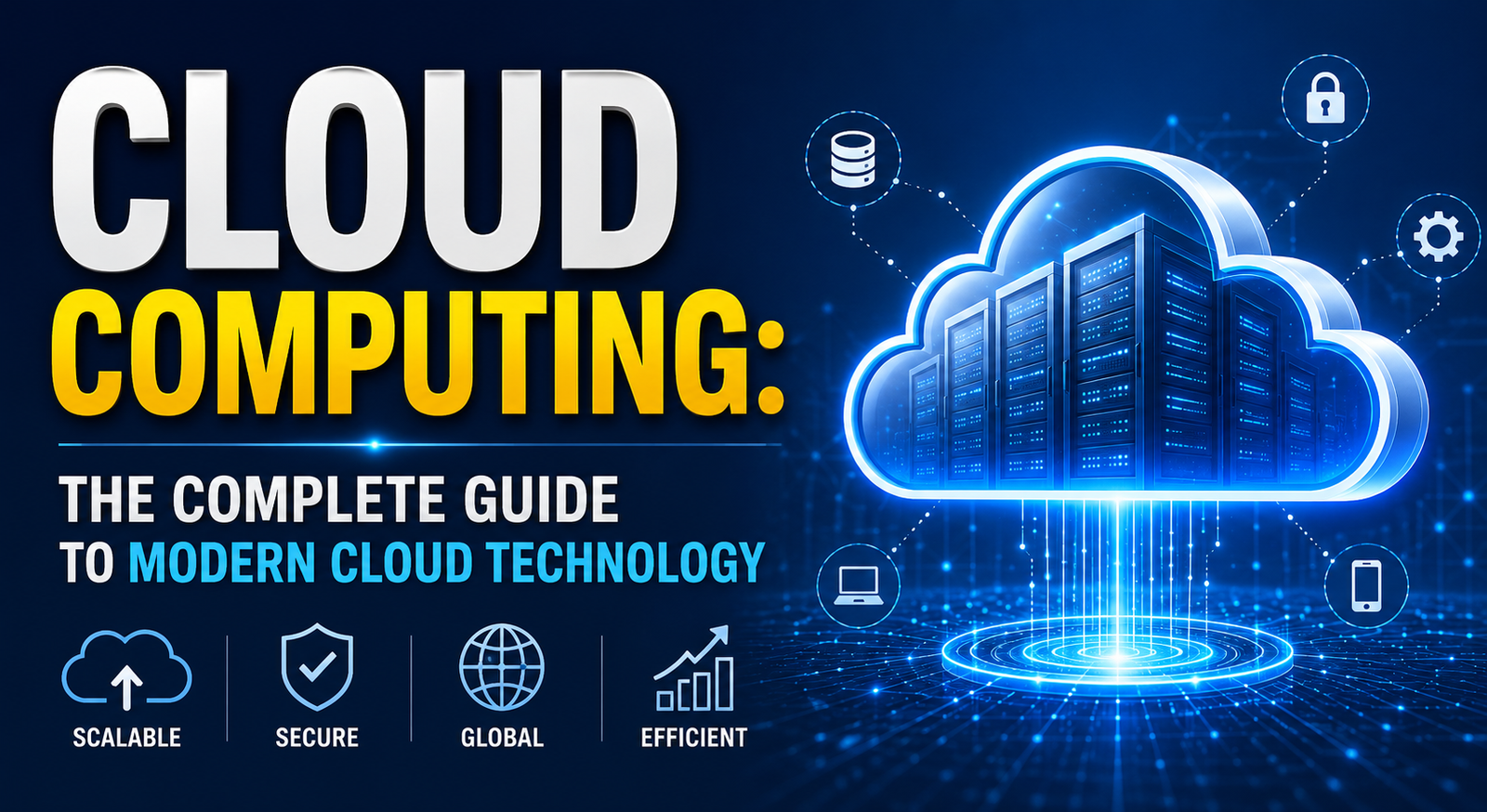
Cloud Computing: The Complete Guide to Modern Cloud Technology
Introduction to Cloud Computing
Cloud Computing has revolutionized the usage of technology by organizations, businesses, and individuals alike. Users can now take advantage of the internet to store their data as well as perform various processes and computations. This contemporary form of technology provides many benefits for all kinds of business.
2026 – Cloud Computing is Still the Future
Almost every industry out there today is relying on cloud computing to function. With the emergence of artificial intelligence, remote working environments, massive amount of data processing, and digital transformation, cloud computing becomes even more crucial. In fact, any company or government institution could not exist without cloud computing in the current era.
This guide is your go-to source for information about cloud computing. It covers everything from different types of cloud computing, benefits, drawbacks, trends, and the future ahead.
What is Cloud Computing?
The term Cloud Computing describes the provision of computing services over the internet. These services consist of:
- Data storage
- Server hosting
- Databases
- Networking
- Software deployment
- Analytical services
- Artificial Intelligence capabilities
Instead of buying costly hardware and managing physical infrastructures, organizations can lease cloud services from vendors and use them anytime.
These vendors provide these services through secure data centers located in various locations worldwide. End-users access these services via the internet using computers, smartphones, or tablets.
How Cloud Computing Works
The technology behind Cloud Computing involves a network of remote servers that operates online. This network handles data storage, application processing, and other functionalities.
Whenever an end-user accesses a cloud-hosted application, he or she sends a request via the internet. The cloud vendor receives this request, processes it, and immediately delivers the results.
Examples include:
- Google Drive for storing data in the cloud
- Netflix for streaming media using cloud-based servers
- Microsoft Office 365 for running productivity software online
- Dropbox for cloud-based file storage and transfer
Deployment Models of Cloud Computing
Cloud computing is mainly classified into three models of deployment.
1. Public Cloud
Public cloud is managed by third-party cloud providers. Here resources are shared by various users via the internet.
Examples:
- AWS (Amazon Web Services)
- Microsoft Azure
- Google Cloud
Pros:
- Affordable
- Flexible scaling
- No hardware management
- Quick provisioning
- Suitable For:
- Small businesses
- Startups
- Web application companies
2. Private Cloud
Private cloud is specifically for a single company only.
Pros:
- Higher level of security
- Greater control
- Greater customization
Ideal For:
- Government agencies
- Financial institutes
- Healthcare organizations
3. Hybrid Cloud
Hybrid cloud combines features of public and private clouds.
Companies may store their sensitive information on private cloud and use public cloud for more scalable options.
Pros:
- Flexibility
- Security balance
- Cost efficient
Ideal For:
- Large organizations
- Organizations that have sensitive data
Service Models of Cloud Computing
Cloud computing also consists of three primary models of services.
1. IaaS (Infrastructure as a Service)
IaaS delivers virtualized computing resources to users over the internet.
Includes:
- Virtual server
- Virtual storage
- Virtual networking
Examples:
- AWS EC2
- Google Compute Engine
- Microsoft Azure VM
Advantages:
- More flexible
- Reduced cost for hardware
2. Platform as a Service (PaaS)
PaaS offers a platform for software developers to create, test, and deliver applications.
Examples:
- Google App Engine
- Heroku
- Microsoft Azure App Services
Advantages:
- Rapid development process
- Simplified deployment process
- Less management of infrastructure
3. Software as a Service (SaaS)
SaaS is a cloud delivery model for software applications.
Examples:
- Gmail
- Zoom
- Salesforce
- Microsoft 365
Advantages:
- Accessibility
- Automatic updates
- No installation needed
Advantages of Cloud Computing
Cloud Computing has various benefits for businesses and individuals.
1. Cost Efficiency
Companies do not need costly servers or infrastructure. They pay for the amount of resources used.
It lowers:
- Costs for hardware
- Maintenance expenses
- Staffing of IT department
2. Scalability
The cloud services scale up or down easily based on business needs.
For instance:
- Online stores can accommodate holiday shopping traffic
- Start-ups can grow without purchasing additional hardware
3. Flexibility and Accessibility
Users can access cloud applications from any location through an internet connection.
It promotes:
- Work from home
- International cooperation
- Mobile work
4. Data Security
Top cloud companies spend a lot of money on their cybersecurity system.
Cloud security includes:
- Encryption techniques
- Firewalls
- Multi-factor authentication
- Data backup methods
5. Automatic Updates
The cloud companies perform automatic software and system updates.
They provide:
- Better security
- Lower downtime
- Enhanced performance
6. Disaster Recovery
Cloud Computing ensures faster recovery from any cyberattack, hardware problems, or natural calamities.
Cloud Computing backs up essential data and reduces the risk of downtime.
Importance of Cloud Computing in 2026
Cloud Computing has become the key enabler for digital transformation.
The technologies that need cloud computing include:
- Artificial Intelligence
- Internet of Things (IoT)
- Big data
- Machine learning
- Blockchain
Enterprises use cloud services to increase efficiency, enhance customer experience, and innovate.
In 2026, Cloud Computing will be crucial for:
- E-commerce
- Banks and financial institutions
- Healthcare facilities
- Educational institutions
- Entertainment industry
- Manufacturing enterprises
Cloud Computing in Business
Businesses implement Cloud Computing to increase efficiency and reduce operational expenses.
Small Businesses
Small companies get low-cost cloud services without the requirement to purchase expensive equipment.
Cloud solutions help small companies in:
- Bookkeeping
- Customer service
- Advertising
- Collaborating online
Large Enterprises
Large enterprises adopt cloud solutions to manage international operations and analyze large volumes of data.
With Cloud Computing, it is possible to:
- Innovate quickly
- Expand globally
- Ensure data security
Cloud Computing and Artificial Intelligence
Artificial Intelligence relies heavily on Cloud Computing.
Cloud platforms can perform complex calculations required by:
- AI training
- Data analysis
- Machine learning algorithms
With cloud services, it is easier to:
- Automate workflows
- Provide enhanced customer support
- Analyze customers’ behavior
Examples of AI include:
- Chatbots
- Recommendation systems
- Predictive analytics
Security Challenges in Cloud Computing
While Cloud Computing has some advantages when it comes to security, it poses challenges as well.
Popular Challenges
Data Breaches
There might be hackers trying to attack the cloud systems in order to steal any data.
Misconfigured Settings
Inaccurately set cloud settings can lead to exposing all data publicly.
Insider Threats
People who have the ability to access the system might misuse the information.
Compliance Issues
Any company is responsible for following various laws and regulations related to data protection.
Ways to Increase the Level of Security in Clouds
There are some ways to improve cloud security significantly.
Strong Encryption
It will ensure that no data leaks while being saved or transferred from cloud.
Multi-Factor Authentication
It provides an additional security option aside from passwords.
Regular Audits
Monitoring will allow noticing possible breaches earlier.
Training Employees
This will help minimize the risk of mistakes and any fraud.
Multi-Cloud Approach
These days there is the tendency of using different clouds by companies.
This strategy is called multi-cloud.
Advantages of Using Multi-Cloud
- Decreased risk of outages
- Increased flexibility
- Optimized costs
- Prevention of vendor lock-in
A company might work with such clouds:
- AWS
- Azure
- Google Cloud
Edge Computing & Cloud Computing
Edge Computing works in synergy with Cloud Computing.
In contrast to Cloud Computing, which relies on centralized cloud servers for all data processing, Edge Computing focuses on processing data closer to its origin.
Advantages include:
- Increased speed
- Real-time data processing
- Lower latency
The applications of Edge Computing are numerous, including:
- Smart cities
- Self-driving cars
- IoT devices
- Automated manufacturing facilities
Future Directions in Cloud Computing
Cloud Computing is an ever-evolving field.
1. AI-driven Cloud Services
AI will enable automatic cloud management and optimization.
2. Serverless Computing
Programmers can create software applications without worrying about servers.
Advantages include:
- Cost savings
- Fast deployment
- Simpler operations
3. Eco-friendly Cloud Infrastructure
Cloud providers are increasingly concerned with developing sustainable data centers and renewable energy resources.
Green Cloud Computing promotes environmentally friendly practices.
4. Quantum Computing
Although it is still in development, Quantum Computing has the potential to revolutionize cloud computing capabilities.
Applications may include:
- Cryptography
- Research in science
- Data analysis
5. Industry-specific Cloud Solutions
Providers offer customized cloud services for various industries.
These include:
- Health care
- Financial services
- Retailing
- Manufacturing
Industry-specific services enhance compliance and streamline operations.
Major Cloud Computing Providers
There are several key players in the Cloud Computing market.
Amazon Web Services (AWS)
AWS dominates the cloud computing market.
Advantages:
- Wide range of services
- Global reach
- Scalability
Microsoft Azure
Azure is preferred by companies and enterprises using Microsoft products.
Advantages:
- Hybrid cloud services
- Enterprise integration
- Superior security
Google Cloud Platform (GCP)
The Google Cloud Platform specializes in:
- Artificial Intelligence
- Data analytics
- Machine learning
Cloud Computing for Developers
Developers are helped significantly by Cloud Computing.
Cloud computing provides:
- Tools for development
- Application programming interfaces
- Test environment
- Automated deployment
Developers are able to:
- Rapidly build applications
- Work together remotely
- Scalable applications
Cloud Storage Overview
Cloud storage allows saving files via the Internet rather than on local devices.
Popular cloud storage providers:
- Google Drive
- Dropbox
- OneDrive
- iCloud
Features include:
- Quick file access
- Backup files automatically
- Share files
- Synchronize data
Cloud Computing in Healthcare
Healthcare facilities employ Cloud Computing to enhance patient care and medical procedures.
Applications in healthcare include:
- Electronically stored health records
- Telemedicine
- Medical imaging
- Artificial Intelligence diagnostics
Cloud Computing helps with:
- Data access
- Collaborations
- Efficiencies
Cloud Computing in Education
Educational institutions apply cloud technology for:
- Online learning courses
- Virtual learning environments
- Collaboration tools
- Storage of educational materials
Cloud computing enables online education opportunities.
Cloud Computing and Big Data
Big data requires tremendous computer power.
Cloud Computing helps businesses:
- To store large volumes of data
- To analyze data quickly
- To derive actionable insights from big data
Various industries that use cloud computing for big data analytics:
- Finance industry
- Healthcare
- Retail industry
- Marketing
Environmental Impact of Cloud Computing
Contemporary cloud operators attempt to minimize power usage.
Various firms adopt:
- Renewable power sources
- Energy-efficient cooling equipment
- Carbon footprint mitigation initiatives
Cloud Computing enables lower environmental consequences than standard data centers.
Skills Required for Cloud Computing Jobs
Cloud Computing provides ample job prospects.
Sought-after cloud abilities encompass:
- Cloud framework design
- Cybersecurity expertise
- DevOps knowledge
- Network management
- Coding experience
- Data engineering know-how
AWS, Microsoft Azure, and Google Cloud certifications hold immense value.
Why Companies Migrate to Cloud Computing
There are numerous motivations behind corporate migration to cloud solutions:
- Reduced expenses
- Enhanced scalability
- Greater security
- Accelerated innovation
- Remote access capabilities
Cloud Computing supports enterprises in maintaining competitiveness within the digital economy.
Challenges of Cloud Migration
Transitioning to cloud systems can be difficult.
Typical hurdles comprise:
- Data migration complications
- Privacy worries
- Training employees
- Integration difficulties
Thorough planning and professional support mitigate such concerns during migration processes.
The Future of Cloud Computing
The future of Cloud Computing is highly promising.
Innovation in technology means cloud platforms will evolve into:
- Speedier
- Intelligent
- Secure
- Energy-efficient systems
Technologies such as artificial intelligence, quantum computing, and edge computing will enhance cloud functionality further.
Cloud Computing will remain a game-changer in shaping the future of commerce, communications, entertainment, and innovations globally.
Conclusion
Cloud Computing has made an incredible impact on our modern-day world. Cloud Computing enables us to access powerful computing resources via the internet at lower costs and increased flexibility.
Cloud Computing plays a vital role in supporting some of the most innovative technological advancements, such as artificial intelligence, remote working, cybersecurity, and big data analytics.
With cloud technologies continuously advancing in 2026 and beyond, organizations embracing contemporary cloud technologies will have a significant competitive edge over their competitors.
There is no denying that knowing about Cloud Computing is imperative in today’s digital world.