
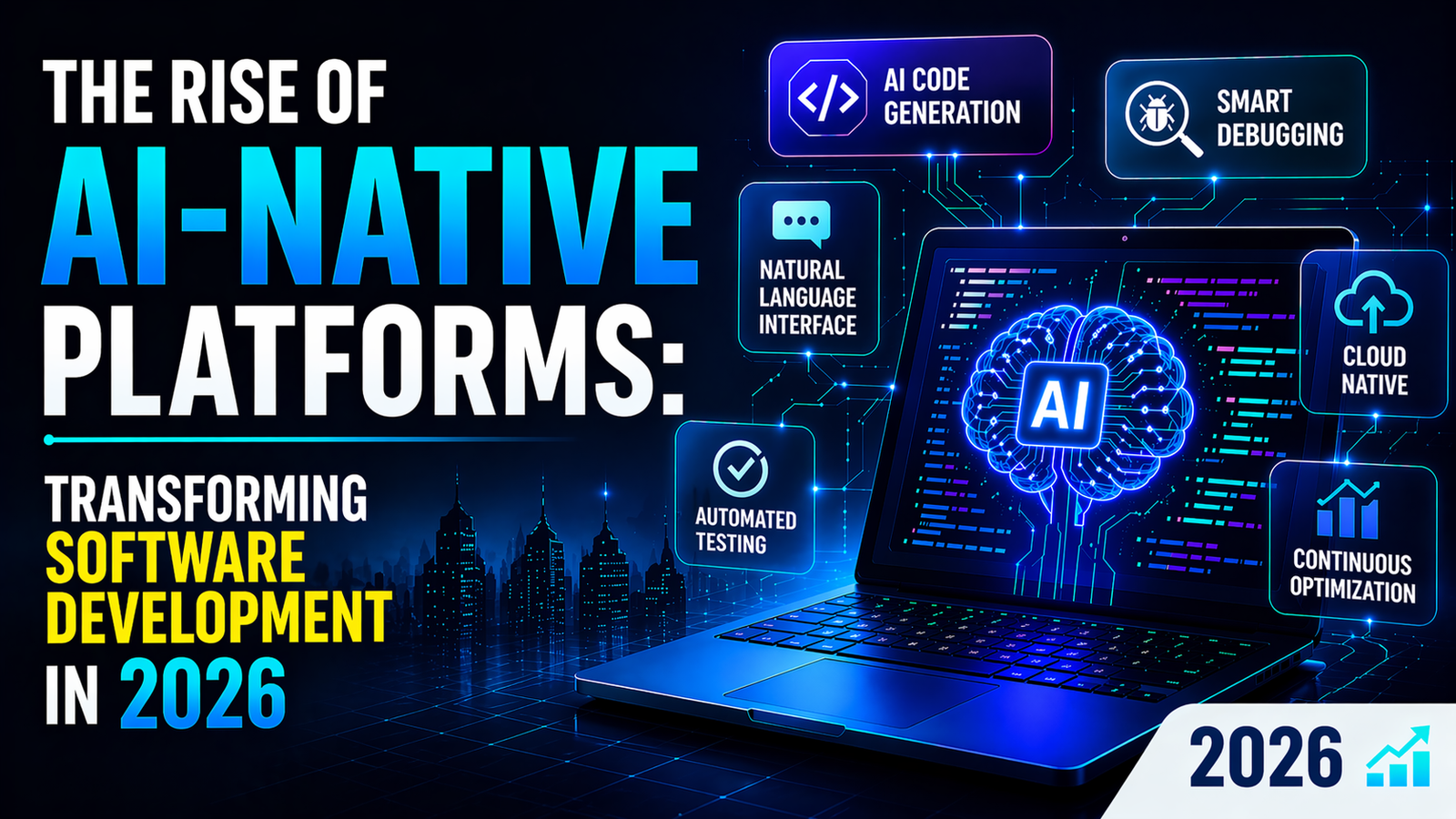
The Rise of AI-Native Platforms: Transforming Software Development in 2026
Introduction
The domain of software development is experiencing one of the biggest paradigm shifts since its existence. AI-native platforms that emerged in 2026 have revolutionized not only the way software development takes place but also completely changed the notion of what is expected from such products. Traditional platforms are limited by merely incorporating the features of artificial intelligence into software development processes; however, AI-native platforms are built specifically to make software development more productive and efficient.
AI-native platforms significantly impact the interaction between programmers and computers; coding has moved away from merely writing code and has turned into an advanced partnership between programmers and intelligent machines capable of understanding programmer intentions and providing software solutions.
In the following text, we will discuss the effect of AI-native platforms on software development in 2026, the technologies behind this development, and its future implications.
What Are AI-Native Platforms?
An AI-native platform is an environment in which AI has been built into each layer. It does not treat AI technology as something to be added but integrates machine learning, natural language processing, and intelligent automation from the very beginning.
Key Characteristics
- In-built intelligence: AI powers all basic processes including code generation, testing, debugging, and optimization
- Continuous improvement: Machines learn and evolve through user behavior
- Natural interaction: Developers can communicate with the system using common language rather than technical syntax
- Automation-oriented approach: Routine processes are carried out without human involvement
Simplifying the concept of AI-native platform – a collaborative tool, not just another tool.
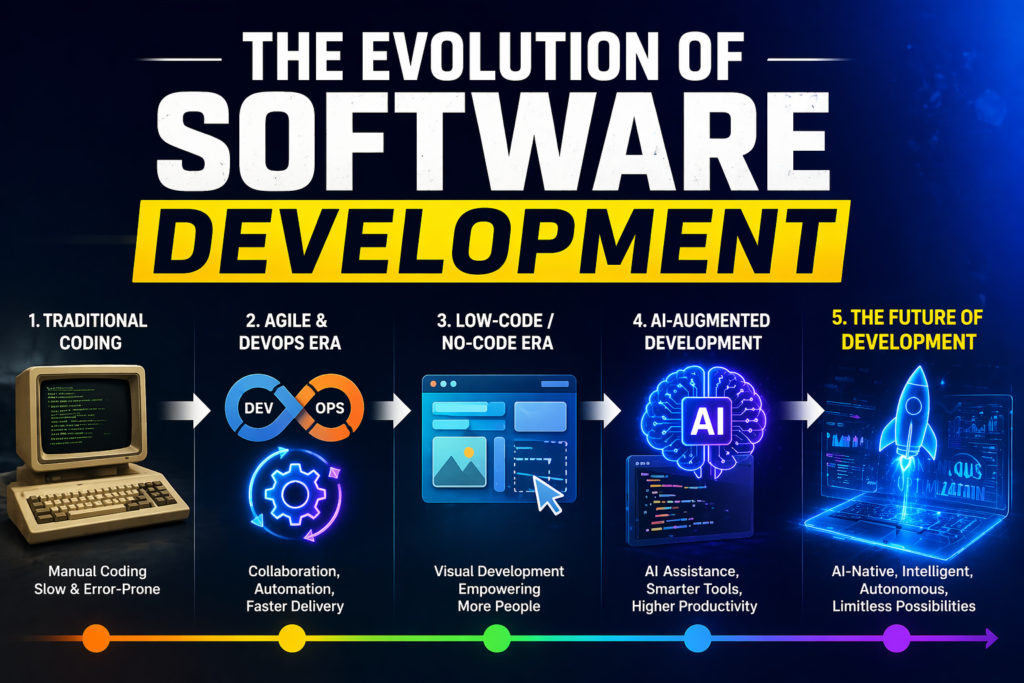
The Evolution of Software Development
It is essential to track the changes in development in order to comprehend the value of AI-native platforms:
- Traditional Development
People had to write code and deploy applications themselves. The process was extremely time-consuming and often led to errors.
- Agile & DevOps Era
Automated tools improved team performance, CI/CD practices became mainstream.
- Low-code/No-code Platforms
Non-coders got access to building applications by utilizing visual interfaces.
- Augmented by AI
Tools started assisting people with making decisions and writing code.
- Native AI Development (2026)
Now AI is actively involved in developing applications rather than assisting developers.
Core Technologies Powering AI-Native Platforms
A few technologies facilitate the creation of AI-native platforms:
- Large Language Models (LLMs)
LLMs are capable of recognizing patterns in human language to enable developers to use natural language to describe the functions of their program and get actual code.
- Machine Learning Algorithms
ML algorithms analyze patterns in code and suggest optimizations or bug fixing.
- NLP
Natural language processing lets users interact with platforms conversationally.
- Automated Testing System
Using AI, automated testing can easily create test cases and run them automatically.
- Cloud Computing Support
Cloud computing is used to support scaling up and other operations needed for the functioning of AI-native platforms.
How AI-Native Platforms Are Transforming Development
- Fast Development Process
It takes seconds for AI to generate full modules which might have taken weeks to code before.
- Elimination of Boilerplate Code
Developers do not have to write any unnecessary code that is repetitive as the AI performs the task of writing it automatically.
- Immediate Detection and Fixes of Bugs
AI will quickly find any bugs, fix them, and implement changes immediately.
- Developer-Focused
An individual development environment will be tailored to fit one’s needs.
- Optimization
Benefits of AI-Native Platforms
- Higher Productivity
Programmers can achieve much more within less time, saving on development time.
- Creativity
Less time is devoted to mundane activities allows programmers to come up with creative solutions.
- Better Coding
Through minimizing mistakes, developers receive recommendations for following coding practices that have proven successful.
- Easy Access
Even novices can develop software thanks to the availability of AI-natives platforms.
- Economical
Companies can minimize development costs but still produce quality products.
Real-World Use Cases
1. Web Application Development
With a description, one can obtain a ready web application.
2. Enterprise Solutions
Big enterprises benefit from using AI-native solutions as well.
3. Mobile App Development
Using AI-native technologies helps to develop an app quickly.
4. Data-Focused Apps
Analytics, as well as predictive algorithms, are implemented into applications through AI-natives platforms.
Challenges and Limitations
In addition to the aforementioned benefits, AI-native applications have their own limitations:
1. Over-Dependency on AI
Developers might get overly dependent on artificial intelligence and neglect their coding skills.
2. Security Risks
There might be hidden vulnerabilities in the generated code that need to be carefully reviewed.
3. Ethical Dilemmas
Problems with copyright issues, biases, and liability of the generated code may emerge.
4. Complex Nature of the Technology
Determining how the AI makes decisions might be challenging.
5. Threat to Jobs
The replacement of developers by technology is feared but unlikely to happen.
The Role of Developers in an AI-Native World
The developers’ jobs will evolve because AI is enhancing their role, not replacing it.
Developers as System Architectural Experts
Developers will move toward system architecture and less coding.
Collaboration with AI
Developers will work with the tools and critically assess generated outputs.
Constant Learning
Developers must always learn and develop as new advancements occur.
AI-Native Platforms vs Traditional Platforms
| Feature | Traditional Platforms | AI-Native Platforms |
| Coding | Manual | AI-assisted or AI-generated |
| Debugging | Manual | Automated |
| Development Speed | Moderate | Extremely fast |
| Learning Curve | High | Lower with AI support |
| Innovation | Limited by time | Enhanced by automation |

Impact on Businesses
1. Quicker Time to Market
The business can release its product quickly in response to market demands.
2. Competitiveness
Use of AI-native platform gives competitive advantage to the company.
3. Scalability
With use of artificial intelligence, businesses will be scalable.
4. Improved User Experience
Future Trends in AI Native Platforms
1. Autonomous Development Tools
AI will be used to create and oversee whole applications on its own.
2. Collaborative Approach Using Multiple Agents
AI agents will collaborate together to perform tasks.
3. Hyper-Personalization of Applications
Applications will adjust based on user interactions in real time.
4. Combination With New Tech
These platforms will combine with IoT, blockchain, and quantum computing.
Best Practices When Adopting AI Native Platforms
Keep It Simple
Start using AI with small-scale applications to get familiar with technology.
Keep an Eye on Human Oversight
Always review AI output to guarantee code is error-free.
Get Adequate Training
Developers must learn to use AI platforms properly.
Consider Security Aspects
Ensure thorough monitoring and testing of any software.
Conclusion
The emergence of AI-native platforms is an important milestone in software development. As opposed to conventional software, the upcoming platforms of 2026 can be considered intelligent co-workers who revolutionize the approach to application creation.
As a result of automation, efficiency, and innovation, AI-native platforms will significantly benefit both programmers and companies that hire them. Nevertheless, one cannot overlook the risks associated with ethical implications, security threats, and the importance of keeping up with human skills.
The future of software development will not imply competition between AI and people, but collaboration.